Home For Your Home For Your Business Industries Served Projects About Us Contact
Call Now WhatsApp

Projects Across Delhi NCR — What Changed, and How.

Five representative projects from Noida, Delhi, Ghaziabad, Gurugram and the NCR belt — the situation we walked into, the approach we took, and where the site ended up.

📍 Noida📍 Delhi📍 Ghaziabad📍 Gurugram📍 Faridabad📍 Greater NCR
📌 Note for the Air-O-Service team: these five cases describe the type of work and the approach accurately, but client names, site photos and measured figures still need to be filled in. Replace each title with the real site (or an anonymised version such as “200-seat banquet hall, Sector 63”), swap the illustration for a real before/after photo pair, and add the numbers you actually recorded — temperature held, inspection cleared, callouts per quarter. This page converts on specifics.
Kitchen exhaust hood, ducting and fresh air supply
Commercial Kitchen📍 Sector 63, Noida

Banquet hall kitchen that couldn't breathe at full capacity

Before

Smoke and heat spilling past the hood during back-to-back events, odour drifting into the dining hall, and an exhaust system running flat out with no fresh air coming in.

After

Capture holds through peak service, the dining side stays clear, and the kitchen passed its safety and hygiene review without remedial work.

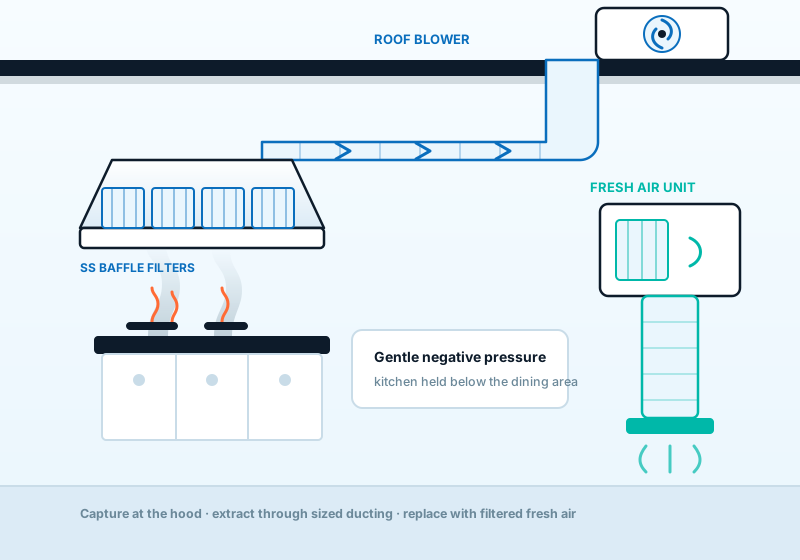
Strategy: re-sized the hood and baffle filters to the actual cooking line, re-routed ducting on a shorter run to the roof blower, and added a dedicated fresh air unit balanced to keep the kitchen gently negative against the hall.
Zoned extraction across multiple cooking stations
Cloud Kitchen📍 Okhla Phase II, Delhi

Six brands, one shared exhaust, constant cross-odour

Before

A single trunk served every station, so one brand's tadka reached another's packing area, grease collected in the shared run, and cleaning meant shutting all kitchens at once.

After

Each station extracts independently, brands can run and shut down on their own schedules, and filter cleaning happens kitchen by kitchen without stopping the floor.

Strategy: split the shared trunk into zoned extraction per station with its own baffle stage, added grease and odour filtration before roof discharge, and set staggered run schedules so total airflow stayed within the building's limits.

Negative cold room with evaporator and minus 18 degree set point
Cold Room📍 Sahibabad, Ghaziabad

Frozen foods distributor losing set point on every loading cycle

Before

Temperature climbed each time the door opened for dispatch, ice built up around the frame and on the evaporator, and the compressor ran far longer than it should have through summer.

After

The room holds −18°C through the dispatch window, frost build-up is gone, and run hours settled into a predictable cycle the team can plan maintenance around.

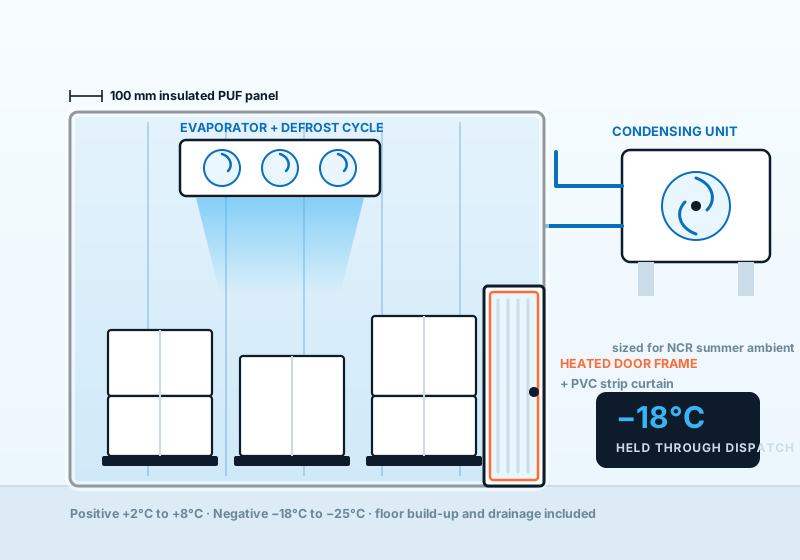
Strategy: rebuilt with 100 mm insulated panels and proper floor build-up, sized the condensing unit for Delhi NCR summer ambient rather than nameplate averages, and added a heated door frame, strip curtain and a defrost schedule matched to actual door-open frequency.

Multi-floor building with VRF outdoor units and duct runs
Enterprise AMC📍 Udyog Vihar, Gurugram

Two-floor office VRF with no service history and four vendors

Before

Breakdowns landed on the hottest days, nobody could say when a filter was last cleaned, and every callout started with re-explaining the site to a different technician.

After

Preventive visits run on a fixed calendar, faults are caught during scheduled checks instead of during meetings, and the facility team calls one person who already knows the system.

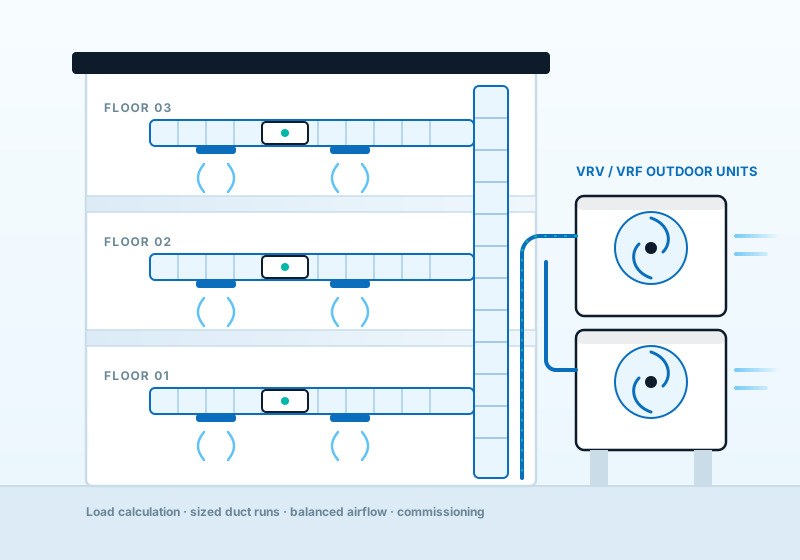
Strategy: audited and tagged every indoor and outdoor unit, moved the site onto a quarterly preventive schedule with logged pressures, filter cycles and refrigerant checks, and assigned a single account manager with a defined response-time commitment.

Mushroom growing room with cooling, humidification and fresh air exchange
Farm Climate Control📍 NCR belt, near Sonipat

Mushroom farm losing crops to temperature and humidity swings

Before

Growing rooms drifted between day and night, humidity was managed by hand with hoses and guesswork, and stale air meant uneven flushes and inconsistent cap quality.

After

Each room holds its own temperature and humidity band through the growing cycle, and flushes come in far more consistently than under manual control.

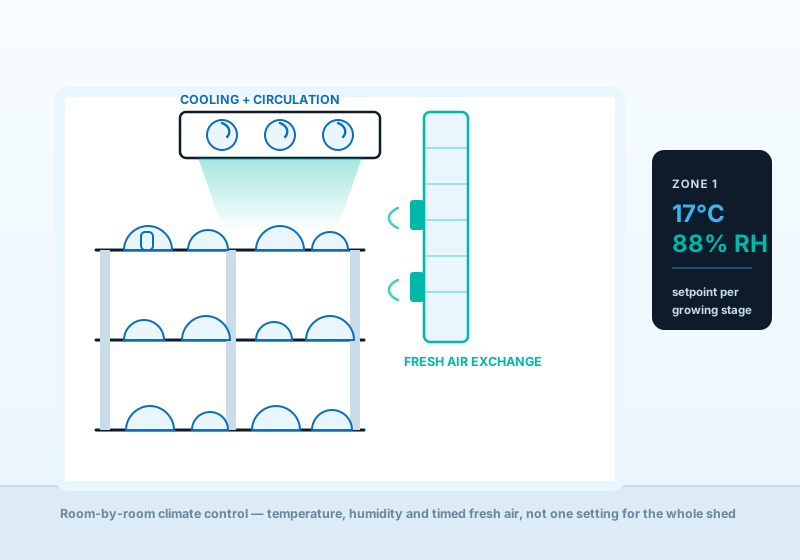
Strategy: designed room-by-room climate control — cooling sized for crop load, controlled humidification, and timed fresh air exchange with circulation ducting — then handed the farm zone controllers with setpoints per growing stage instead of one setting for the whole shed.

Want your site to be the next case study?

Tell us where you are in Delhi NCR and what isn't working — we'll come and look at it.

📞 Call Now